American Aircrafs
42-40054
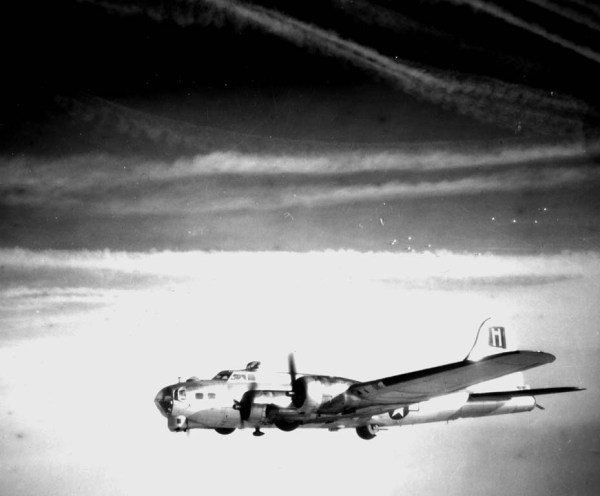
Boeing B17 388BG 561BSQ mid-air
Letter: F
Model: Boeing B17G Flying Fortress
Sqn: 561BSQ
Crash oorzaak: In de lucht gebotst met 42-37886 Blitzing Betsy
Crash Locatie: Schoonebekerveld nabij Weiteveen
Tijd: 14:50
The Crew
- Formatieleider: Capt. George C. Job - Overleden
- Vlieger: Capt. Paul Eugene Brown - Onbekend
- 2e Vlieger/Waarnemer: 2nd Lt. Joseph Paul Lechowski - Overleden
- Navigator: 1st Lt. John William DuPrey - Overleden
- Bommenrichter: 2nd Lt. Rolland Turner Gill - Krijgsgevangene
- Radiotelegrafist: T/Sgt. John Basil Blatz - Overleden
- Boordwerktuigkundige: T/Sgt. Roy Ellsworth Joyce - Krijgsgevangene
- Buikkoepelschutter: S/Sgt. Edwin W. Pfanner - Krijgsgevangene
- Zijkoepelschutter: S/Sgt. Elbert Paul (Bert) Moyer - Krijgsgevangene
- Zijkoepelschutter: S/Sgt. Walter Scott Reed - Overleden
- Staartschutter: S/Sgt. William Angelo Marcario - Krijgsgevangene
42-40054 through the eyes of Roy Joyce
On board of 42-40054
Capt. George C. Job, squadron commander and leader of ‘B’ Group formation was sitting in the left chair of 40-40054. The pilot, Capt. Paul E. Brown, had changed to the right seat, which normally was the place for the 2nd officer, 2/lt. Joseph P. Lechowski. As customary in situations like this, he in turn had taken the position of the tail gunner, acting as an observer. That way the crew of 42-40054 counted eleven heads. The mid upper turret was manned by Flight Engineer T/Sgt. Roy E. Joyce, who flew his 20th mission that day, teh second with Paul Brown’s crew.
Referring to the “Blitzing Betsy” report, the aircraft was fatally hit by fighters upon reaching the Dutch/German border. The men of 42-40054 observed one of the engines of the assaulted plane left a smoke trail. Roy Joyce heard how their waist gunner counted the parachutes coming out of the aircraft. he counted ten. The aircraft itself remained perfectly in position, apparently flying on auto-pilot.
Collision
Only minutes later, their own aircraft lost oil pressure on engine no. 2. Walter Reed, the left waist gunner, reported smoke coming out of the engine. This prompted Paul to ask George (who sat left of him) to eather the propeller of the engine hit. George shut off the engine and did as Paul ordered. This incident was one of the causes in a chain of events that would end up in disaster. Because apparently at the same instant, the command plane of the lower flight had too much elevator and climbed a little; no matter what, the aircraft collided with 42-40054 just as this aircraft lost some altitude. With an astounding noise, Blitzing Betsy’s heavy metal propellers smashed away the leading edge of 40-40054’s port wing. Also a hole was smashed in the starboard wing, exactly at the location of no. 3 fueltank… This would mean the end of both 42-40054 and “Blitzing Betsy“. With a flash, reaching from inner starboard engine to right elevator, the fuel ignited.
Parachute
Every crewmember would wear a parachute harness during flight, while the parachute itself would be hung within reach of its owner, in order for it to be clipped on whenever necessary in case of emergency. This could be fixed in a matter of seconds. When a crewmember would move through the plane, he would carry his chute with him. A disadvantage of carrying a clipped-on chute was that the pack, carried on the belly, would hinder the man in his movement. Therefore some men, in the midst of their exciting duties, would postpone clipping on their chutes longer than would be safe.
George Job
Before the flight, Roy Joyce – and perhaps not only he – had wondered what kin of a man George Job would be, as he had never flown with him before, but during the flight he soon found out that George was a real skillful pilot and was fully aware of his responsibilities. When George told that he would not clip on his chute yet, Roy assumed his commander wanted not to have the chutepack in the way while he and Paul with all their might attempted to control the aircraft to, if not the aircraft, at least safe the crew.
No escape
Roy hung the parachute left of George’s seat, close at reach. Consequently, he clipped on his own and made for the bomb bay. When he opened the door, he backed away with great fright: the compartment was filled with burning gas. He vaguely recalls some crewmembers standing in the doorway leading from the radio compartment to the bomb bay and someone jumping through the hatch. He returned and went into the spare tools storage compartment, just when this room started to fill with fire. He decided it was better not to fiddle with the handle of the escape hatch and returned to his turret.
Sudden salvation
While he watched the fighters coming into the formation once again, he suddenly lost sight; when he came to, he fell through the air, away from the plane. At his wits enough to decide to postpone opening his chute, he only pulled the chord when he got close to the ground.
The canopy opened at a height of about 500 yards. He landed in a ditch that was covered with ice, which shattered under the force he landed with. With some trouble he crawled out of it and removed his chute.
Later, in May ‘945, while they waited for their evactuation from P.o.W.camp Moosberg, Paul Brown told him that the aircraft had gotten into a flat spin. When they had fully lost control, they tried to evacuate, but when unbuckling their seatbelts, rightaway they forcefully were pressed against the cockpit ceiling. The following explosion apparently had Paul thrown or sucked out of the aircraft through a hole in the canopy. George and Roy must have followed him in a similar way. But George must have nog been able anymore to clip on his parachute. According to Paul also the bombardier and the navigator had escaped this way.
In good hands
When Roy had crawled out of the ditch, he saw an old man standing on the other side of the ditch, coolly smoking a pipe. Behind him, a much younger man in civilian clothing appeared, supporting a half walking, half limping
pilot, it turned out to be Paul. Roy joined them by crossing the bridge. Then the two civilians accompanied both Americans over the bridge and across a field to a farmhouse, where they were welcomed by the lady of the house. Roy was given a bedroom rightaway and a large towel; besides that he received a shirt, pants and a pair of cloggs. The American understood what was expected of him and got dressed.
When he returned to the kitchen as a “civilian”, he saw that the table was set for two with “cake and a warm drink”. Meanwhile the people tried to talk him to no avail, the language barrier appeared too large. About twenty minutes later a Dutch policeman arrived, who addressed them in English. Roy explained him that he had lost his map of Europe and asked the Dutchman if he would be able to replace it; he also liked to know whether they had a chance to evade the Germans.
Stuck
The policeman retreated to a corner of the kitchen with two or three other men (of which Roy thought they were neighbours) for a quick debate; soon the airmen were informed though that an attempt to escape from Emmen would be too risky. The best they could do for them, to the policeman’s opinion, was to get them into hospital.
In Hospital
When dark had fallen, an ambulance arrived with two nurses – “they looked like nuns”, Roy said, who transferred them to a hospital. Before they left the house, the lady of the house quickly gave Roy four fresh eggs and a few Dutch rusks, gesturing they were meant for their breakfast in hospital.
As soon as the men arrived there though, the food was taken away from them. As all rooms were occupied, they were assigned to beds in the corridor. The next morning they moved to a room, after the patients who had stayed in there, were moved elsewhere; here they were together with six other aircrew. As Roy suspected, the room was guarded by German sentries.
This is how Paul and Roy got into German hands after five hours: a remarkable fact considered that the hiding place of allied crew who had abandoned their planes would usually leak fast and the Germans always were down on the spot in a flash. Evidently in this case only very little people had been aware of the presence of the two Americans and they, who did know or suspected something, had managed to keep their mouths shut.